logo
Goede prijs  online

details van de producten

Huis > Producten >
Divers Chemisch product
>
Cyclohexyl methacrylate CHMA CAS 101-43-9

Cyclohexyl methacrylate CHMA CAS 101-43-9

Merknaam: Chemfine
Detailinformatie
Plaats van herkomst:
China
Markeren:

Cyclohexyl methacrylate chemical

,

CHMA CAS 101-43-9

,

Cyclohexyl methacrylate industrial grade

Productomschrijving
Product Introduction

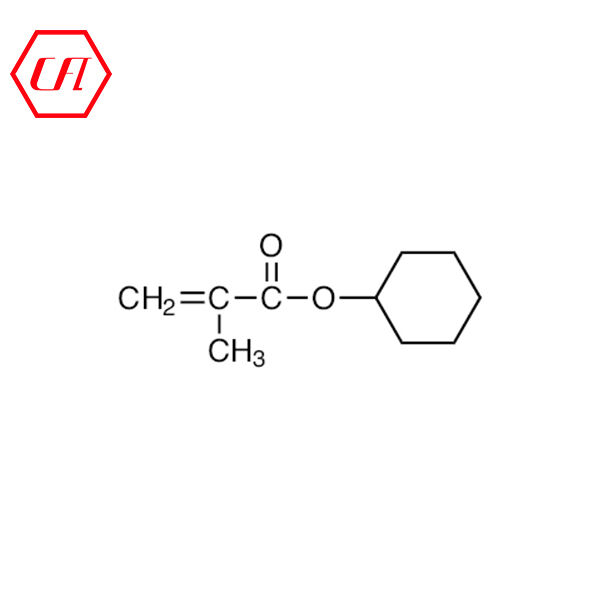
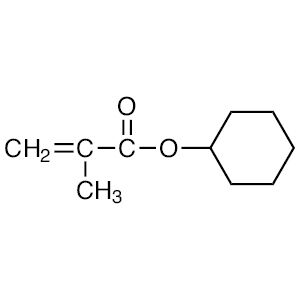
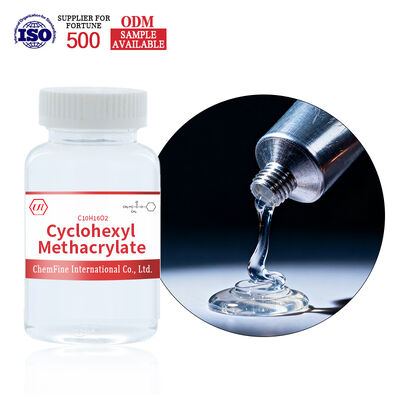
Cyclohexyl methacrylate, commonly abbreviated as CHMA (CAS 101-43-9), is a versatile monofunctional ester of methacrylic acid. It is primarily used as a specialty monomer in the synthesis of high-performance acrylic resins and polymers. CHMA is highly valued for its ability to impart high glass transition temperatures ($T_g$), excellent scratch resistance, and superior weatherability to the finished polymer. Its unique alicyclic structure provides a balance of hardness and flexibility, making it a preferred component in coatings, adhesives, and dental materials where clarity and durability are paramount.


Applications

Acrylic Resin Monomer

This product is extensively used as a co-monomer to produce acrylic resins that require high hardness, water resistance, and resistance to ultraviolet degradation.

Weather-Resistant Coatings

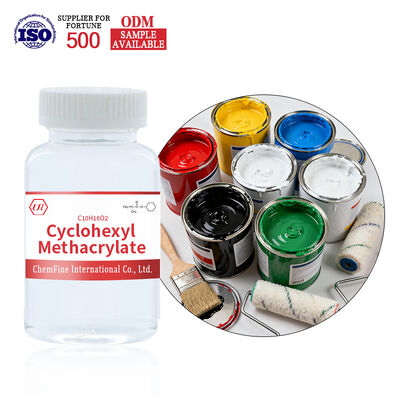
It is a critical component in automotive and industrial coatings, providing enhanced gloss retention and durability against harsh environmental conditions.

Optical and Dental Materials

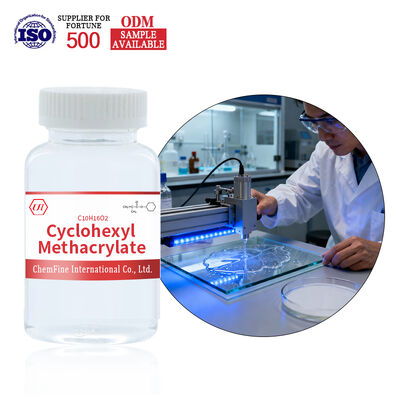
CHMA is utilized in the formulation of optical lenses and dental resins due to its excellent transparency, low shrinkage during polymerization, and biocompatibility.


Packaging

The standard industrial packaging options for Cyclohexyl methacrylate include:

  • 200kg tight-head steel drums (Standard export packaging).
  • 1000kg IBC tanks for streamlined bulk handling in manufacturing plants.
  • ISO Tanks for large-volume international maritime transport (approx. 20-22 MT).
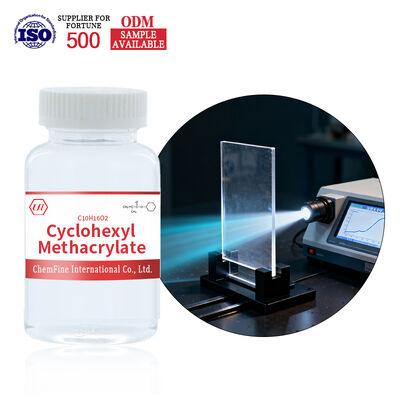
  • Small-volume sample bottles available for laboratory and research evaluation.

Storage

Cyclohexyl methacrylate should be stored in a cool, dry, and well-ventilated warehouse. It is sensitive to light and heat, which may trigger spontaneous polymerization; therefore, it is typically supplied with an inhibitor (such as MEHQ). Keep the containers tightly sealed and store them away from direct sunlight, heat sources, and open flames. It should be kept separate from oxidizing agents and peroxides.


Synonyms

Cyclohexyl 2-methylprop-2-enoate, Methacrylic acid cyclohexyl ester, CHMA, 2-Propenoic acid, 2-methyl-, cyclohexyl ester.


Basic Physical Properties
Property Value/Description
CAS Number 101-43-9
Molecular Formula $C_{10}H_{16}O_{2}$
Molecular Weight 168.23
EINECS Number 202-943-5
Appearance Clear colorless liquid
Melting Point -60°C
Boiling Point 210°C
Density 0.964 $g/cm^{3}$
Refractive Index 1.458
Flash Point 82°C

Certificate of Analysis (COA)
Test Item Specification Standard
Appearance Clear colorless liquid
Purity (by GC) ≥ 99.0%
Moisture Content ≤ 0.05%
Color (APHA) ≤ 10
Acidity (as MAA) ≤ 0.02%
Inhibitor (MEHQ) 50 - 100 ppm

Related and Similar Products
  1. Methyl Methacrylate (MMA) – CAS 80-62-6

  2. Butyl Methacrylate (BMA) – CAS 97-88-1

  3. Isobornyl Methacrylate (IBOMA) – CAS 7534-94-3

  4. Ethyl Methacrylate (EMA) – CAS 97-63-2

  5. Lauryl Methacrylate (LMA) – CAS 142-90-5

  6. 2-Hydroxyethyl Methacrylate (HEMA) – CAS 868-77-9

  7. Glycidyl Methacrylate (GMA) – CAS 106-91-2

  8. Stearyl Methacrylate (SMA) – CAS 32360-05-7

  9. Benzyl Methacrylate – CAS 2495-37-6

  10. Cyclohexyl Acrylate – CAS 3066-71-5


FAQ

Acrylic Resin Monomer

  • Q1: Why is CHMA preferred over MMA in certain resin formulations?

    A1: CHMA provides better water resistance and lower polymerization shrinkage compared to MMA, along with improved weatherability for outdoor applications.

  • Q2: Does CHMA affect the glass transition temperature of polymers?

    A2: Yes, it significantly increases the $T_g$ of the copolymer, leading to harder and more thermally stable resins.

  • Q3: Is CHMA compatible with other vinyl monomers?

    A3: It is highly compatible with a wide range of acrylates, methacrylates, and styrene monomers for customized copolymer synthesis.

Weather-Resistant Coatings

  • Q1: How does CHMA improve the gloss of coatings?

    A1: Its refractive index and alicyclic structure contribute to high clarity and surface smoothness, which enhances the specular gloss of the coating.

  • Q2: Is CHMA suitable for automotive topcoats?

    A2: Yes, it is frequently used in automotive clearcoats to provide scratch resistance and prevent yellowing over time.

  • Q3: Does CHMA provide chemical resistance to industrial paints?

    A3: The cyclohexyl group provides a hydrophobic barrier that improves the coating's resistance to moisture, alcohols, and dilute acids.

Optical and Dental Materials

  • Q1: What makes CHMA ideal for dental resin applications?

    A1: Its low irritation potential, high transparency, and excellent mechanical strength after curing make it a standard choice for dental restoratives.

  • Q2: Does CHMA have a high refractive index for optical lenses?

    A2: It has a moderate refractive index (approx. 1.458), which, combined with low dispersion, is beneficial for specific optical lens designs.

  • Q3: How does CHMA behave regarding volume shrinkage?

    A3: Compared to smaller methacrylates, CHMA exhibits lower volume shrinkage during polymerization, ensuring better dimensional stability in precision-molded parts.

Goede prijs  online

Details Van De Producten

Huis > Producten >
Divers Chemisch product
>
Cyclohexyl methacrylate CHMA CAS 101-43-9

Cyclohexyl methacrylate CHMA CAS 101-43-9

Merknaam: Chemfine
Detailinformatie
Plaats van herkomst:
China
Merknaam:
Chemfine
Markeren:

Cyclohexyl methacrylate chemical

,

CHMA CAS 101-43-9

,

Cyclohexyl methacrylate industrial grade

Productomschrijving
Product Introduction

Cyclohexyl methacrylate, commonly abbreviated as CHMA (CAS 101-43-9), is a versatile monofunctional ester of methacrylic acid. It is primarily used as a specialty monomer in the synthesis of high-performance acrylic resins and polymers. CHMA is highly valued for its ability to impart high glass transition temperatures ($T_g$), excellent scratch resistance, and superior weatherability to the finished polymer. Its unique alicyclic structure provides a balance of hardness and flexibility, making it a preferred component in coatings, adhesives, and dental materials where clarity and durability are paramount.


Applications

Acrylic Resin Monomer

This product is extensively used as a co-monomer to produce acrylic resins that require high hardness, water resistance, and resistance to ultraviolet degradation.

Weather-Resistant Coatings

It is a critical component in automotive and industrial coatings, providing enhanced gloss retention and durability against harsh environmental conditions.

Optical and Dental Materials

CHMA is utilized in the formulation of optical lenses and dental resins due to its excellent transparency, low shrinkage during polymerization, and biocompatibility.


Packaging

The standard industrial packaging options for Cyclohexyl methacrylate include:

  • 200kg tight-head steel drums (Standard export packaging).
  • 1000kg IBC tanks for streamlined bulk handling in manufacturing plants.
  • ISO Tanks for large-volume international maritime transport (approx. 20-22 MT).
  • Small-volume sample bottles available for laboratory and research evaluation.

Storage

Cyclohexyl methacrylate should be stored in a cool, dry, and well-ventilated warehouse. It is sensitive to light and heat, which may trigger spontaneous polymerization; therefore, it is typically supplied with an inhibitor (such as MEHQ). Keep the containers tightly sealed and store them away from direct sunlight, heat sources, and open flames. It should be kept separate from oxidizing agents and peroxides.


Synonyms

Cyclohexyl 2-methylprop-2-enoate, Methacrylic acid cyclohexyl ester, CHMA, 2-Propenoic acid, 2-methyl-, cyclohexyl ester.


Basic Physical Properties
Property Value/Description
CAS Number 101-43-9
Molecular Formula $C_{10}H_{16}O_{2}$
Molecular Weight 168.23
EINECS Number 202-943-5
Appearance Clear colorless liquid
Melting Point -60°C
Boiling Point 210°C
Density 0.964 $g/cm^{3}$
Refractive Index 1.458
Flash Point 82°C

Certificate of Analysis (COA)
Test Item Specification Standard
Appearance Clear colorless liquid
Purity (by GC) ≥ 99.0%
Moisture Content ≤ 0.05%
Color (APHA) ≤ 10
Acidity (as MAA) ≤ 0.02%
Inhibitor (MEHQ) 50 - 100 ppm

Related and Similar Products
  1. Methyl Methacrylate (MMA) – CAS 80-62-6

  2. Butyl Methacrylate (BMA) – CAS 97-88-1

  3. Isobornyl Methacrylate (IBOMA) – CAS 7534-94-3

  4. Ethyl Methacrylate (EMA) – CAS 97-63-2

  5. Lauryl Methacrylate (LMA) – CAS 142-90-5

  6. 2-Hydroxyethyl Methacrylate (HEMA) – CAS 868-77-9

  7. Glycidyl Methacrylate (GMA) – CAS 106-91-2

  8. Stearyl Methacrylate (SMA) – CAS 32360-05-7

  9. Benzyl Methacrylate – CAS 2495-37-6

  10. Cyclohexyl Acrylate – CAS 3066-71-5


FAQ

Acrylic Resin Monomer

  • Q1: Why is CHMA preferred over MMA in certain resin formulations?

    A1: CHMA provides better water resistance and lower polymerization shrinkage compared to MMA, along with improved weatherability for outdoor applications.

  • Q2: Does CHMA affect the glass transition temperature of polymers?

    A2: Yes, it significantly increases the $T_g$ of the copolymer, leading to harder and more thermally stable resins.

  • Q3: Is CHMA compatible with other vinyl monomers?

    A3: It is highly compatible with a wide range of acrylates, methacrylates, and styrene monomers for customized copolymer synthesis.

Weather-Resistant Coatings

  • Q1: How does CHMA improve the gloss of coatings?

    A1: Its refractive index and alicyclic structure contribute to high clarity and surface smoothness, which enhances the specular gloss of the coating.

  • Q2: Is CHMA suitable for automotive topcoats?

    A2: Yes, it is frequently used in automotive clearcoats to provide scratch resistance and prevent yellowing over time.

  • Q3: Does CHMA provide chemical resistance to industrial paints?

    A3: The cyclohexyl group provides a hydrophobic barrier that improves the coating's resistance to moisture, alcohols, and dilute acids.

Optical and Dental Materials

  • Q1: What makes CHMA ideal for dental resin applications?

    A1: Its low irritation potential, high transparency, and excellent mechanical strength after curing make it a standard choice for dental restoratives.

  • Q2: Does CHMA have a high refractive index for optical lenses?

    A2: It has a moderate refractive index (approx. 1.458), which, combined with low dispersion, is beneficial for specific optical lens designs.

  • Q3: How does CHMA behave regarding volume shrinkage?

    A3: Compared to smaller methacrylates, CHMA exhibits lower volume shrinkage during polymerization, ensuring better dimensional stability in precision-molded parts.